from the Clarion-Ledger / Hattiesburg American Mississippi Books Page
Sunday, May 14, 2017
By Matthew Guinn
SPECIAL TO THE USA TODAY NETWORK – MISSISSIPPI
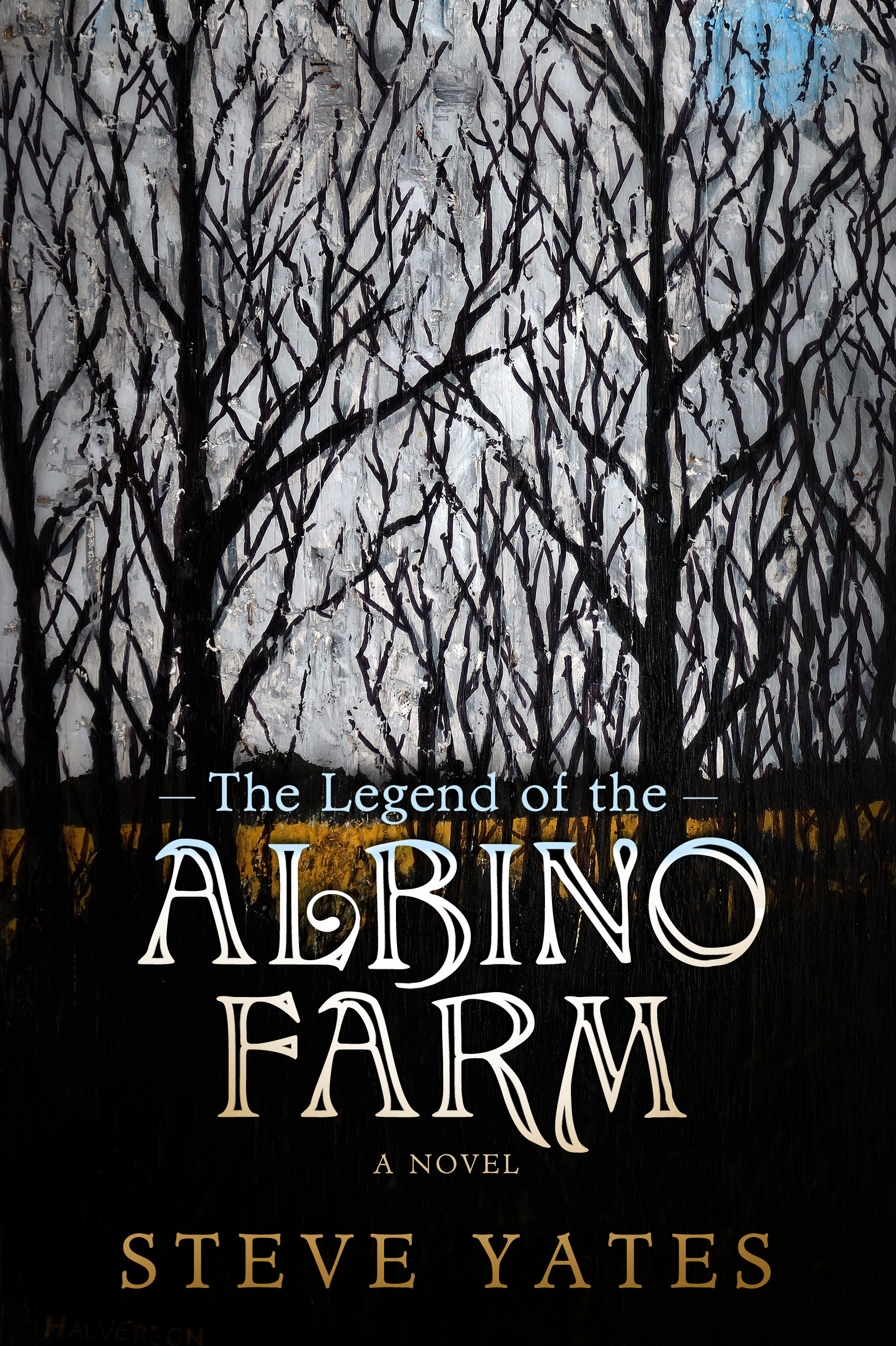
“Happy families are all alike,” Leo Tolstoy famously said, but “every unhappy family is unhappy in its own way.” For the feuding Sheehys and Ormonds of Steve Yates’ The Legend of the Albino Farm, the fractured clan is so unhappy as to be one-of-a-kind, sui generis.
Yates’ characters embody personalities as flinty as the Ozarks soil they once farmed. And as their once-grand farm disintegrates, Yates gives us a fresh take on the plantation-gone-to-dust trope.
The urban legend of the novel’s title is one that sprang up about a misperceived late-night incident between two of the Sheehy clan and a group of drunken revelers partying at the edge of the Sheehy farm. This is not the space to reveal the truth of the encounter, but suffice it to say that given the dark night, the amount of cheap beer consumed, and the appearance of the Sheehys, the trespassers leave the property terrified that they have been accosted by two pale and ghostly apparitions intent on harming them.
Back in Springfield relating their misadventure, the partiers embellish the tale and the rumor mill buffs it even further. In time, the Sheehy place becomes known as The Albino Farm—the forbidding abode of every type of boogeyman the community can project onto it. Rumors swirl about breeding—even incestuous breeding—among the “albinos” by a kind of mad Doctor Moreau. In each retelling, the tales grow wilder, imbued with the accretion of urban folklore down the years.
Meanwhile relations in the Sheehy-Ormond family are rapidly deteriorating. As the Sheehy patriarchs die off, inheritances are disputed and the reading of last wills and testaments unearths old grudges quietly nursed for years. Neither the Sheehys nor the Ormonds are the type ever to forget a slight, and as the land is parceled out, the once-idyllic wonderland that the Irish families called a Aes Sidhe (“fairy land”) is whittled down to a rotting old manse and a patchwork of mismanaged acreage.
One of the putative “albinos,” Hettienne Sheehy, emerges as the center of the family disputes. Turns out that the ill-fated night that birthed the farm’s new moniker was the catalyst for a rift started, maintained, and indeed nurtured over decades. Hettienne, intent to abscond her inheritance, grows increasingly obstinate as she reaches adulthood.
It is in Hettienne’s adulthood and marriage that the novel achieves its strongest pitch. Yates is a realist, and his depiction of adult relationships is assured, wise, and true. Hettienne and Wes’ marriage is a prolonged partnership in which the episodes of bliss are not, alas, the norm. Rather, Hettienne’s contentious relation to her inheritance comprises “the only prominent obstacle to a happy, rounded existence” for the pair. So much so that at one point, Wes tells her, “If we were not Catholic and were not married under God, I would leave you now.” In such scenes the damaged Hettienne comes fully to life, and the reader hangs on the tension of whether or not she will ever let the past be fully behind her—whether the summers of her youth in Missouri will ever be laid to rest.
If the border state setting of Missouri might call into question The Legend of the Albino Farm’s southernness, the style and quality of Yates’ writing do not. In its attention to the details of domestic and family life, Albino Farm echoes the work of Katherine Ann Porter and Eudora Welty; the obduracy of the grown and estranged Hettienne calls to mind Ron Rash’s Serena.
The quality of Yates’ prose merits such comparisons. In Yates’ telling, a vulture does not merely fly overhead, it is seen to “spiral thoughtfully” over the Sheehy place. A dirty truck parked out front of the farmhouse is streaked with “sienna fans of dried mud.” In the wreckage of the once-grand house, a tall window is patched with “a sheet of Visqueen stretched and nailed across it, and in the night wind, this black, shining membrane bulged and collapsed in fitful, crackling cycles.”
With The Legend of the Albino Farm, Yates adds to a growing ouvre of historical fiction including his works Morkan’s Quarry and The Teeth of the Souls. He also adds another powerful novel to the growing body of Ozarks—and Mississippi—literature.
* * *
Matthew Guinn is the author of The Resurrectionist and The Scribe. He is an associate professor of creative writing at Belhaven University.
 Fiction and History