FINDING THE STORY IN HISTORY
I have heard that the best book you can buy to help you create historical fiction rich in detail is a facsimile of the Sears and Roebuck catalog. Of course, I rushed right out and got one, from 1897. I’ve pawed through it a couple of times, charmed. But I’m just not sharp enough to see a soul or a plot there.
To get at the whole universe of a character, I need to know not only what she longed to wear or kept in her desk or lugged in her purse but also what her job demanded and what was happening around her. And I like to set the bar pretty high when it comes to the level of a character’s intelligence. After all, I’m asking for eight hours or more of a reader’s attention. Who wants to ride eight hours seated in coach with a dullard? Smart characters notice a lot of stuff, and think about or may desire a lot of stuff. The human mind has had roughly the same processing and storage capacity since, oh, the time of Gilgamesh. And ever since Lucy first reared her children, the heart has shown about the same mix of muscle and soul. I can’t sit still with a stunted, rustic protagonist with narrow or only magical horizons. I tend to want to learn and live a lot when I read. Where to get all that stuff? Here are some notes on sources you may not have considered inspiring.
TRUST DOCUMENTS
A will or a trust is a remarkable window into the real life of what people valued. And many times a will or trust will show you the cold ways that families can operate. Like deeds and tax records, wills and trusts are filed in any courthouse or county archives. Scanning the wills of a large, wealthy Irish Catholic family, I found not once, but twice one daughter treated very differently from her many siblings, receiving not a devised share of the real estate, crops, and money, but a stingingly small lump sum payment. The second time this

happened, the check was a little more generous and would have easily bought her a reasonable, new car. Yet in the will some mysterious and delicious conflict unfolds. Several prompting letters appear from the family’s attorney. The check has been received, certified mail, but never cashed. The estate cannot be resolved. Please advise; please act. At last the daughter returns the check by mail to the family attorney, whole, and without comment. Plot, estrangement, heartbreak—something alive awaits here. HINT: Like a deposition or a trial transcript, you do not need to quote a will or a probate letter whole cloth. Find the drama; the rest is dross.
DISCOVER THE OBSCURE
Popular narrative histories from the era you want to write about, histories published by major publishing houses in New York and meant for broad reading audiences may have good bibliographies to consult. But otherwise they may not help much to discover what it was like to live in an era before you were born. No stuff, no details. They can be like a plane ride over a village when you need a hike and a yurt. I lean toward hyper-local histories usually from university presses and small and independent houses. I also don’t shy away from histories from quirky regional publishers. They are immersive, committed, sometimes exhaustive, and they often rely more on anecdote (narrative and scene!) than an academically vetted volume or certainly a commercial, flyover history might. The aggressive scanning project that Google has undertaken, for example, has brought access to previously lost accounts of the past. Wondering about Bulgaria just before World War I and hoping to write about a British soldier later in the Great War, I found an extraordinary travelogue by British bon vivant, John L. C. Booth, Troubles in the Balkans. This book will likely never see anything but facsimile, on demand print again. But the detail—stained and distorted through a free-wheeling, crushing British imperialist vision—it was just what I needed to glean not only the smell, taste, and packing lists from the time, but real, unalloyed British attitude. Very smart characters from the past may have profoundly different ideas about the world and how it works, ideas that seem quite harsh to our own “sophisticated, humane, and informed” worldviews. HINT: Get over your own self. Let your character’s full soul loose on the page, even the “horrible” parts.
READ THE MANUAL
Sometime in your writing life, you may wonder how a road was carved above the Columbia River in Oregon or how a churn drill worked in a quarry. There is no greater source I know of than Halbert Powers Gillette’s Handbook of Rock Excavation: Methods and Costs. And, lucky you, you will not have to pay a major research library $185.00 or face denial of your MFA degree in order to own your copy! Abe books and others will gladly find you a vendor. In 1556, the major sales rival to the Gutenberg Bible was Georgius Agricola’s De Re Metallica, essentially a book on how to mine gold. From the very beginning, publishing has been the carrier wave for human “how to” knowledge. I feel absolutely adrift reading or writing about characters who do not have jobs, who do not have a tangible means of support. There is, I promise you, a nonfiction account of how to do just about every job, every task humankind has ever undertaken. HINT: Find the manual written at about the same time your fiction is set so that you can then get costs, knowledge, technology, attitude, and equipage just right.
CHECK THE NEWSPAPER
In the past, there were only two occasions in which an individual’s life events were likely to make the newspaper—marriage and death. The notice of engagement and later marriage and especially the obituary contain a abridged version of a life history. Sometimes these can solve parts of a mystery. Let’s recall the estranged daughter above, the one receiving and later refusing checks, the one excluded from the family’s larger
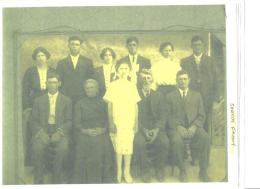
trust and its divisions. Her obituary was shorter than her brothers’ and sisters’, but it mentioned a husband. And I noted that the deaths of her brothers and sisters occasioned some substantive reporting aside from the obituary, especially as the wills passed through probate and became public record. These were very wealthy people I was researching, and in the 1970s, you did not have to be a movie or music star to make the paper in a small town when you died. Mere wealth sufficed. Our possibly estranged sister, alas, did not merit anything but a standard death notice. Finding her husband’s obituary, I discovered his occupation, a sheet metal worker. He was memorialized and buried Catholic, as she was and as were all her wealthy siblings. But, a sheet metal worker . . . that’s a different social class than the rich gentlemen farmers. This could have been a wedding of which the progenitor of all this wealthy clan disapproved, and that disapproval spanned the generations in that $4,000.00 check. Delicious. And the perfect stuff for fiction—drama, conflict, sorrow, backbone, and redemption.
CHECK THE WEATHER
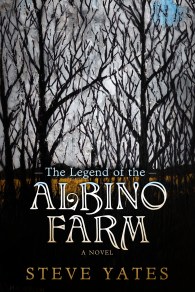
Get used to the whir of microfiche, those twirling reels, and that ghostly blue-gray blizzard of light and, when all that has stilled, the dark smudges of history carved in the old newspapers. If you have blocked and outlined your novel well enough to know that you have a scene coming up set in 1946 and another in 1958, give the microfiche a whirl and see what was on people’s minds around that date. See as well what the weather was. Really. There are still people alive who recall, even in the American Deep South a time before air conditioning. Any family relying on the land watches weather faithfully. Weather matters, and it can add color and atmosphere to the reality you are creating. Examples: I knew my novel “The Legend of the Albino Farm” started in 1946—that’s when the nonsensical, cruel local legend first began circulating. So I scanned the local newspapers of the day. Big headlines appeared about the nuclear bomb the United States detonated against a fleet of surplus Navy warships to observe the grim destruction. And there was something of a flying saucer craze underway. One magazine predicted there would soon be “Flying Saucers for Everybody.” The closing of the Office of Price Administration, interestingly, garnered three top-of-the-page banner headlines above in-depth reporting. I learned a lot about what even wealthy gentleman farmers might have on their minds in 1946. HINT: Your story matters more than any atmosphere. I did exactly what you should never do. I wrote two great big opening chapters choking with details and gagging with awkward insertions of all this stuff I had learned. By the time my editor and I got it right sized, here (underlined for emphasis) was all that remained from my newly gained knowledge of the closing of the Office of Price Administration: “Without Hettienne there at Emerald Park for June and July, and with grain prices roaming high and free, the Sheehys did not invite the Ormond children for the usual extended stay.” Weather may rule the farm, but not the heart of the story.
* * *
A portion of this originally appeared in The Zafris-Kothari Novel Workshop at http://www.novelworkshop.org/new-blog/ywwpsz5dx3eezc4hm6yle7398zn8c9
Steve Yates is the winner of the Juniper Prize for Some Kinds of Love: Stories and the inaugural Knickerbocker Prize (chosen by Lauren Groff) for Sandy and Wayne: A Novella. He is the author of two novels Morkan’s Quarry and its sequel The Teeth of the Souls, about a limestone quarrying family. In April 2017, Unbridled books will publish his novel, The Legend of the Albino Farm. In the daylight he is associate director / marketing director at University Press of Mississippi in Jackson.
 Fiction and History