BOOK 1
I DREAM YOU
In the story, it all happened in the Ozark Mountain country,
many miles from what we of the city call civilization.
In life, it has all happened many, many times before,
in many, many places. The two trails lead afar.
The story, so very old, is still in the telling.—Harold Bell Wright, The Shepherd of the Hills
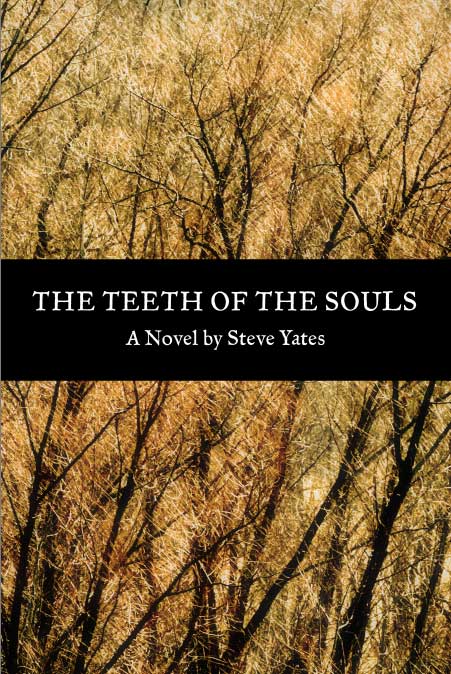 That’s how The Teeth of the Souls could have opened. Sequel to Morkan’s Quarry and due from Moon City Press in March of 2015, The Teeth of the Souls: A Novel has four sections or “Books.” Book 1: I Dream You; Book 2: The Curtain of the Future World; Book 3: How Merry Are We; Book 4: Easter 1906.
Previous to final editing, each of these “Books” started with a quote from something that had inspired me on the long road to writing and publishing The Teeth of the Souls. I started writing it in 1994! And originally there was not going to be a Morkan’s Quarry. There was going to be one giant novel called “The Teeth of the Souls,” an opus maximus like The Oldest Living Confederate Widow Tells All or Soldier of the Great War or Dog Years. Thankfully there arose a chorus of voices that intoned, “DUMB DUMB DUMB DUMB!” (sung to the theme song of Dragnet).
There have been so many revisions along the way. And so many tricks I played on myself to make sure that storylines had a chance to tighten and became more intense and interesting. The Teeth of the Souls is the story of a marriage that was a lie and a lie that became a marriage. It spans the years 1865 to 1906 in my hometown of Springfield, Missouri. Almost as much had to be written as had to be shed.
Four quotes stuck with me, and yet in the end stuck out from the manuscript like big pinfeathers. One was a quote from Vance Randolph about lucky stones and nightmares, one was a favorite sentence of mine from Donald Harington’s The Architecture of the Arkansas Ozarks, another was a quote from that heartbreaking essay Mark Twain wrote after the 1904 lynching in Pierce City, Missouri, “The United States of Lyncherdom.” And one, right smack at the beginning, was the quote above from arguably the first and most famous fiction ever written about the Ozarks.
Why do writers stick quotes from other writers in their books? Sometimes, especially in historical fiction, multiple quotes at the beginnings of chapters clutter the works, violently, archly interrupt the seamless dream, and actually put an intimidating distance between the storytelling and the reader.
Quotes at the start of each chapter can read like a plea: “I swear to you I read all this arcane stuff! I did my research, I promise!” Or the quotes can sound like the writer protesteth too much: “This hugely unlikely circumstance really happened, I swear, I swear! See, here! Some old Colonel wrote about it!” Or, worst of all, quotes can be perceived as the writer saying to the reader, “I read all this stuff; I am so smart. Kneel before my brain shines!”
Ugh. And so I ditched those four pin feathers to deliver unto the reader four meaty and clarified servings instead.
I was surprised and gladdened when the editors at Moon City put up a fight to keep the quote above. These quotes, once I had severed them in my heart from The Teeth of the Souls, came to mean for me only private lights, small votives that lit a personal path. But one editor protested, the quote from “Wright is so, well, right” where it is in the manuscript.
That editor saw some flickers of what I felt then in the light of that votive. The story of the marriage that was a lie and the lie that became a marriage begins in Book 1 I Dream You. Happily in the case of more than one of the lost quotes, some character in the book says them aloud anyway. Judith, struggling with Leighton’s pending marriage plans, says to him, “I used to dream about you when you was at the war. I dream you through fires and bullets and mens that came running towards you. They part and turn like birds at a steeple in my dream.”
And it was the commencement of this dual story that made those four sentences from Wright stay with me. “In the story, it all happened in the Ozark Mountain country, many miles from what we of the city call civilization. In life, it has all happened many, many times before, in many, many places. The two trails lead afar. The story, so very old, is still in the telling.”
I will confess, I have a lot of trouble appreciating The Shepherd of the Hills. In my first year at the writing program in Arkansas I forced myself to read it—I was home in Springfield to get my wisdom teeth out. High on hydrocodone and diet coke, I wrote the part of Morkan’s Quarry that was published in the Ontario Review, where Leighton with Looney’s Home Guards travel the White Hills to hunt Sam Davies and end up killing “men of no renown whatsoever.” And I read The Shepherd of the Hills, in which all the killing, the main climax of the novel, happens while the protagonist (or at least the current point-of-view character, the person the story should be about) has fainted.
I figured you could not be a writer of the Ozarks without confronting this book. And along with St. Augustine’s City of God, Plato’s Republic, Marx’s Das Kapital, Duane G. Meyers’ The Heritage of Missouri, and Njal’s Saga, The Shepherd of the Hills was indeed a prominent book on the family shelf.
Published in 1907 The Shepherd of the Hills was Harold Bell Wright’s second fiction, and it was among the first American novels to sell over one million copies. If the stats at Gerry Chudleigh’s very thorough website about Wright are to be believed, The Shepherd transformed Harold Bell Wright into the Nicholas Sparks of his day, a writer with that magic-touch ability to thrill, move, and entertain a mass of readers while making his fiction conform to all the comfortable values and sentiments current in the mainstream. Charming, heartwarming, tear-jerking, sometimes thrilling, but never challenging to commonly held sentiments and sturdy beliefs, The Shepherd of the Hills was prototype of a kind of mass consumable American novel. And there is nothing in the world wrong with what me and a bookseller friend from Mississippi coined as “Cozy Comfort Fiction,” which is I think the most apt description of this ultra-portable, non-threatening genre. That I can’t get a kick out of it doesn’t mean a thing. Too bad for me.
But in The Shepherd of the Hills Harold Bell Wright achieved something beyond what Nicholas Sparks or Olive Ann Burns or Robert James Waller have ever created, something that few writers of Cozy Comfort Fiction ever manage to do. Wright, who was neither native nor from the Ozarks, left in the wake of his book a pious Western mountain ethos and a lasting log-cabin and overalls industry to those of us who are both native and from. In many ways Old Matt and crew gave the world its first handle on the Ozarks, a region which previously cast no substantial figure in the national imagination aside from lead mines and headlines of Balkanized, internecine killings. Even today a handy meme map of the nation had its cartoon determination of us Ozarkers as “NO IDEA.”
The sturdy, courageous yeoman Hillbilly, in many ways that we Ozarkers still have to deal with, was born in Wright’s pages. Vehicles as divergent as an outdoor play and the “Vigilante Zip Rider” both draw upon, maintain, and project the power of this old novel.
I can think of only a few other mass-consumed fictions that so permanently fashioned the broader world’s image of one place or region. Forks, Washington, may one day find there is a twilight to the bloodsucking, undead legacy currently feeding like a lamprey on its ferny forests and Spartan high school. But more than a century later, Wright has in the Ozarks living carriers and advocates of his metaphor, ambassadors that continue to stamp all of us hillbillies even if his actual novel is no longer read by anyone but writer/scholars newly missing their wisdom teeth and jazzed on codeine.
So there’s the now lost quote, curled on the editing floor, one of the most interesting sections of that Wright novel that marked this Ozarks forever, and certainly the one riff of his that stuck with me. Of course, excising this quote does not mean I’ll never confront (or embrace) Wright and his legacy again. The story, so very old, is still in the telling.
 Fiction and History