Having delivered my manuscript to a publisher and having experienced in 2010 the transformation from “my manuscript” to “our book,” and having now delivered a second manuscript to the hands of a very different publisher, I am even more amazed and saddened now when I hear about an author losing perspective on the power of collaboration. It is rare, thank heaven, but sometimes authors will not listen to editors, or will get into unproductive and protracted wrangles with their publishers and poison what is an otherwise miraculous process. Titles, copy edits, catalog copy, cover design, there are many moments when authors forget that the publishing process is a remarkable team effort and not a solo flight.
Full disclosure, I am assistant director and marketing director at University Press of Mississippi, and I have been in university press publishing since 1994. So maybe the peace I have to offer in this guidance is too easily earned?
But I think not. My instincts of creative ownership and authority (most of that word authority is “author” and maybe therein lurks much of the trouble) can’t be any more jaded and dulled than the next writer’s. After all, I conceived and wrote this novel, and I conceived and wrote these twelve short stories. Right?
Yes, but I also chose to seek out a publisher and thereby publish these twelve stories WITH the help of others. I did not “self-publish.” Sometimes in the publishing process, authors forget that when we choose to collaborate, we make a choice both to let go of and to share glory.
Admittedly my friends who have published will tell me horror stories in which the publisher failed to communicate and so collaboration became instead ambush and coercion. You cannot let go and share with someone you no longer trust.
Communication is a balancing act for us as publishers. Many of the steps in bringing a manuscript to a book and a book to the marketplace are tedious and unremarkable. Yet the progress would grind to a halt if we in the marketing department were to inform the author minutely at every motion. At University Press of Mississippi, we bring to market over 200 author creations each year (75 new traditionally printed books; a corresponding number of ebooks in three different formats; 20-40 books returned to print or brought to paperback via print-on-demand technology; 10-12 distributed titles from museum and other publishing partners; and newly digitized books from our backlist or from new acquisitions of valuable content). So with that workload, our communications of what we’re doing have to be timed, to-the-point, clear, and, unfortunately sometimes, a little systematic and programmatic.
But no author has that perspective. How could they? To the author, there is (naturally and unavoidably) but one manuscript becoming a book that matters! Enduring the fog and chaos of the publishing experience, authors can become fearful and disoriented. I know I certainly did while Moon City Press published Morkan’s Quarry. Even to one inside it, the book industry is a mysterious mess, and it is so transformed since 2008 as to be unrecognizable to the author or friend who last published a book in 2005. In fact there may be no greater obstacle to an author’s working relationship and happiness with a publisher than that constant stream of advice from friends who published with a publishing house of tremendously different scale, and who published before Borders failed, before there was a Kindle, before Barnes & Noble announced its store-closing future, and before the Great Recession. Publishing has changed more in the last four years than in all the nineteen years I have been in it. Some authors can grasp that. Some… well, dreams are big, and hard to adjust to new scales.
Once in a while I have to talk an author off the ledge. And it is quite often a moment when the author has arrived at the terrified and lonely feeling that nothing is being done with his or her book, or that something is being done that the author never imagined. It is then that I try to help authors find this somewhat tough-love perspective: Number 1) No one in the universe will ever be more excited about your manuscript than you, the author. No one; Number 2) Second only to you, no one else in the universe will be more excited about the book we are making together than the members of this publishing team. Even your mother cannot be as concretely and actively excited as your publishing team. Spoken calmly and then applied specifically to whatever miscommunication, lack of communication, and/or disagreement it was that acutely triggered the alarm, these two points of perspective have saved many a project from terminal acrimony.
When an author finds a publisher, there is no one moment when “my manuscript” becomes “our book.” There are many moments, really. Editing foremost, in that the first read by an editor and that editor’s guidance is invaluable. The editor is the second person in the universe to share your vision that this content matters enough to expend resources and pay for copy-editing, design, printing, marketing, AND conversions into multiple ebook formats.
Copy editing is as well one of those moments when your manuscript becomes “our book.” The nitty-gritty of improving sentences and eliminating error, this yeoman work is time-consuming and invaluable to the mutual project. I am ever grateful that I came to the writing of fiction through the brutally no-nonsense (and quite expert and professional) editorial scalpels of a sports department at a solid daily newspaper in the late 1980s. I had great editors there, Steve Koehler, Scott Sharpe, Lyndal Scranton, and Fran Skalicky, who kicked my butt and (only when absolutely necessary) encouraged me. Now as a publisher nothing saddens me more or distances me more thoroughly from a project than hearing that an author has exploded and rejected the perceived imposition of copy editing. No one writes prose that is too good for the love and care of a copy editor. No one. I have found in both the copy editors on my two books a wealth of value added to the prose (now our prose!) and to my own knowledge of the world.
Design may be the cardinal moment when author and publisher lose affection and perspective. How sad in that a moment which can be intensely mutually fulfilling and propelling can become so sour! With Morkan’s Quarry, I had no preconceived notion of what might be on the cover aside from thinking vaguely that limestone or crushed limestone might be a good background. I provided Moon City Press no images.

What resulted was nothing like anything I had conceived, nothing I had dreamed, but by embracing Myriam Bloom’s design, a really beautiful, selling cover resulted, coincidentally bearing an image detail from one of my favorite painters, Gustav Courbet.

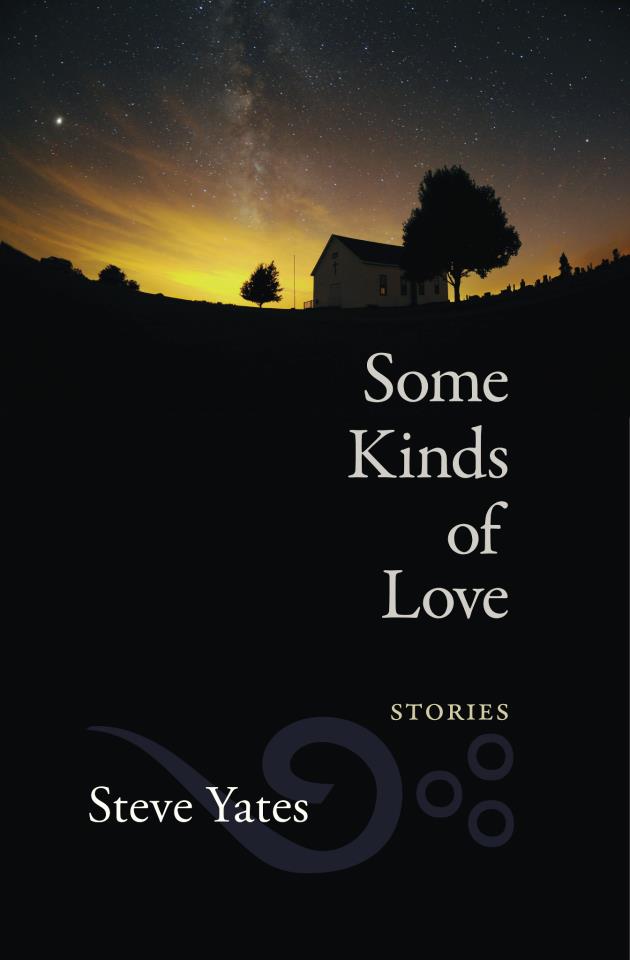
When it came to Some Kinds of Love: Stories, I had more conceptual notions, and I had in mind a great image from Missouri photographer Dan Bush (see http://www.missouriskies.org/). Designer Sally Nichols at University of Massachusetts Press first added a kind of free radical, a richly evocative symbol that I immediately embraced but didn’t comprehend fully, until friend Robby Gilkerson pointed out it was an Aladdin’s lamp with three wishes alongside! And, flash, yes it was; Sally said so. The dingbat (a printer’s symbol) recurs throughout the book now. Opening what was my manuscript to this enticing and tangible symbol of the transformation of “my manuscript” into “our book” was indeed a magic like that of the Djinn.
Next, Sally merged an already ragged left typography lean on key pages inside with a cover that proves a royal wax seal on “our book.” Striking to me and to other book designers I know, were the multitude of takes Sally openly presented for the front cover. Eight different possibilities she shared with me. A lot of work went into each of them, and this abundance of choice made me feel very much a part of the collaboration. I have to admit I still stare at the final result in wonderment on the screen. Our book, wishes granted!
 Fiction and History