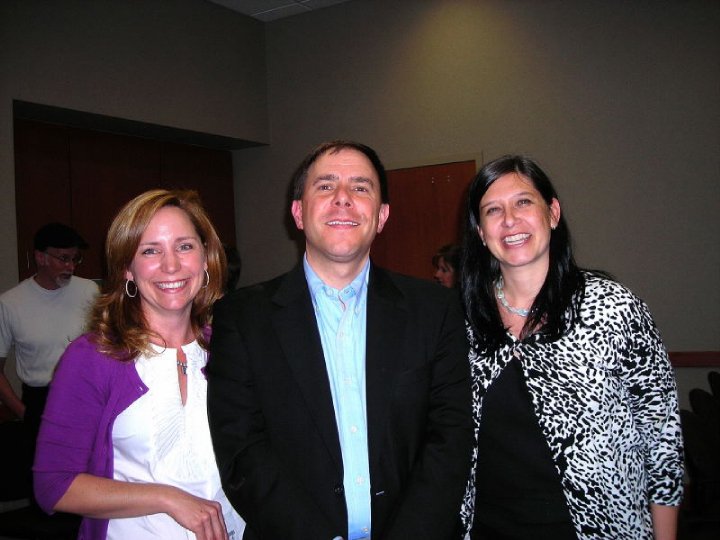
 At the Eudora Welty Symposium, Tommy Franklin (Crooked Letter, Crooked Letter, Smonk, Hell at the Breach, Poachers) said that it was a leap of faith to write a book, and an even greater leap of faith that anyone would ever read what you had made up.
Perhaps the greatest leap of faith is that a reader would do the miraculous: 1) respond and 2) publicly review the work. As someone who works in publishing for his daily bread—I am marketing director at University Press of Mississippi—I know well the sound of silence when no miracles happen for a book despite all manner of unctious prayer and good works.
Having a book published by Moon City Press, and having the press market it and get it in the hands of readers, I still count as a miracle. But the miracle I never envisioned came afterward—people in the Ozarks writing me and telling me that the novel moved them, that it was their story, the story of their forebears. People I didn’t know, people I had not heard from in years.
I know of no other human communication to compare these notes to—no crush note or love letter, no thank you note, no award can match the soaring impact of these. Someone from your homeplace says to you: “I have read all 353 pages of this book you made up and I loved every minute of it and I can’t wait for you to write the sequel. Hurry.” These gestures are deeply inspiring, and I will admit to rereading them whenever my spark has faded. They are pure oxygen to the ember.
I have to lift two here as example, two from people I have never met face-to-face. Both readers posted these on the Barnes & Noble.com page for Morkan’s Quarry. The one from November is from a reader who identified himself as one who married the sister of someone I graduated high school with, so there is that pleasurable and grounding, small-town connection of knowing of but not being acquainted with the correspondent.
And the second miracle from April… I have no idea in the world who wrote this, and that makes it equally as powerful because the correspondent watched me speak about the book, then took the time to write such kind, thoughtful words.
Faith, I am leaping. Miracles, color me believing.
Richly and convincingly detailed depiction of the Civil War in the Ozarks
Posted November 4, 2010, 11:10 PM EST: “In this richly written and subtly layered novel, Steve Yates has woven his characters deeply into time and place, creating a tapestry that is at once intimate and terrifying. Set in the Missouri Ozarks during the Civil War, Yates convincingly brings into focus a tortured place in a troubled time, and does so through eyes that are by turns hardened and achingly sentimental. The novel follows Michael Morkan and his son Leighton on a journey that neither of them has asked for and that neither of them can fully understand. Like Abraham Lincoln who said, “I claim not to have controlled events, but confess plainly that events have controlled me,” the Morkans find themselves swept along by the tide of a war that often brings out the worst in human nature. Panoramic in its sweep, yet intimate in its detail, I found Morkan’s Quarry quite convincing, more capable of rendering a believable picture of Missouri in the Civil War than any history book. This is because, rather than focusing on large-scale troop movements, or the political posturing of major players in the war itself, Mr. Yates takes us into the lives of ordinary people, who can only look at the buffeting winds of a tragic and difficult time through the lens of their own experience. The Morkans and those around them are all struggling, on a very personal level, with what the savage world has thrust upon them. Morkan’s Quarry, to me, is like a Caravaggio painting, at once so clear and so terrifying that it can’t help but be real. Morkan’s Quarry, of course, is a must read for Civil War buffs, and for those with an interest in Ozarks history, but I think it goes beyond that. This novel is far too rich, too valuable in its study of the human condition to be held only by those groups, and should be read by anyone who loves truly good writing.”
Civil War in the Ozarks
Posted April 23, 2010, 10:12 AM EST: “Recently, I heard Mr. Yates read chapters from his novel and was moved by the description of events immediately after the Battle of Wilson’s Creek–particularly as the amputated limbs piled up by the surgeons’ tables. How very gruesome and still very sorrowful for our nation. With the sesquicentennial of the Civil War fast approaching, this book will take on an added importance, being a first-rate story about the war in Southwest Missouri. People outside of the Ozarks have little to no idea of Missouri’s suffering during the war. This novel opened my eyes, and will be a revelation to all who read it. But I should add that I don’t think it’s a regional book: being a Northeasterner myself, I’m convinced not simply by the historical setting but by the quality of the writing.”
 Fiction and History