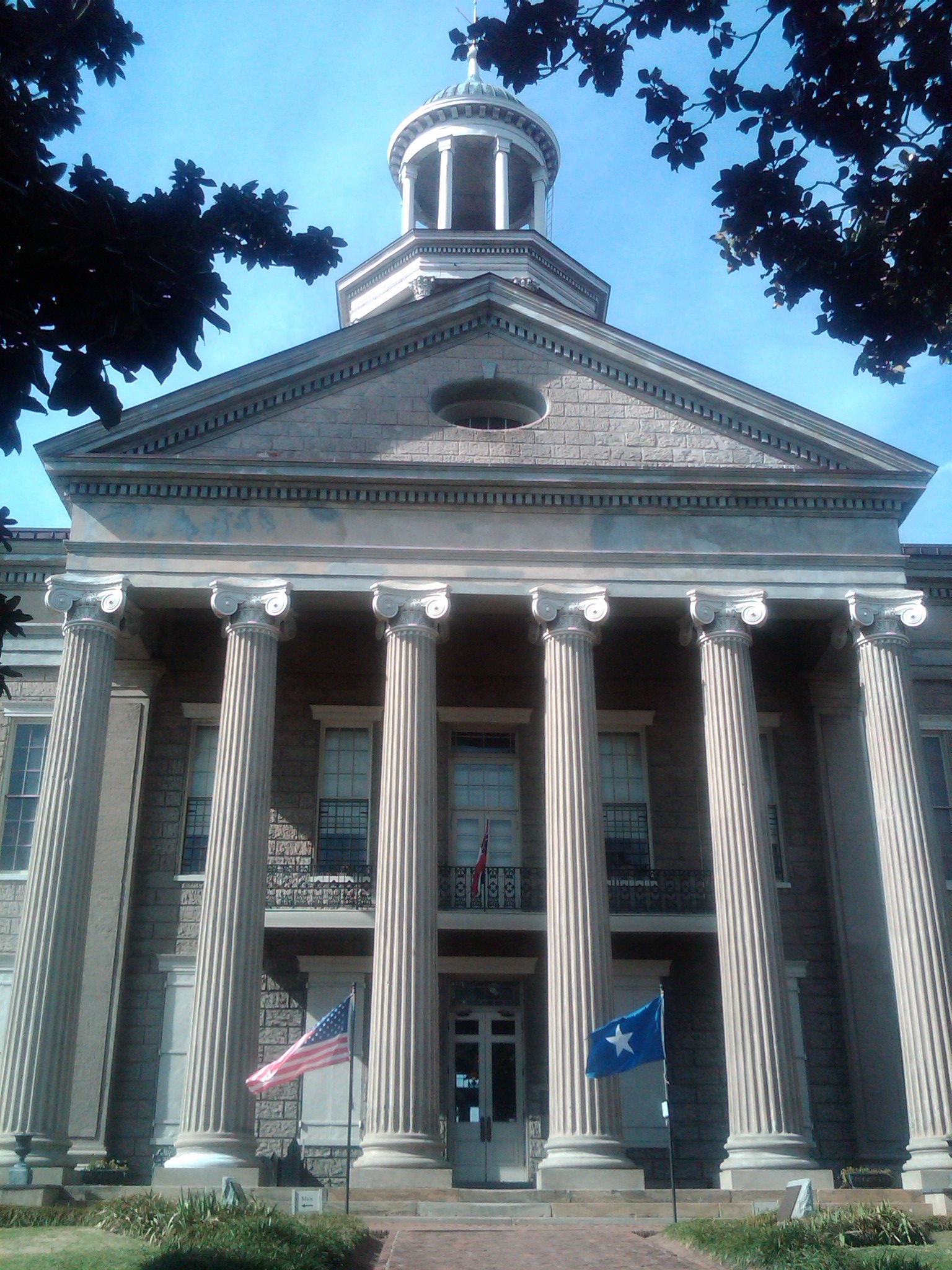
Despite the clash of academic (and counter academic) armies in the night, the Old Court House Museum and its museum store stands, an unsurrendered flag of populist history. Here historical expression is really in the hands of the people of Vicksburg, admittedly those with the surplus to fund its upkeep—one could argue class tensions among the plaques thanking donors. But without expression of “a history” desired by the steady, paying flow of mostly caucasian patrons of all socio-economic brackets from the south and from outworlders (that’s me), the story would have to fold its tent. Through two recent curator/directors there is a fierce, unassailable “populist history” expressed in each of the many museum rooms.
And there is much history to be responsible to here: On the east-facing steps (pictured), Jefferson Davis gave his first political speech. In the cupola at top, Stephen D. Lee, Earl Van Dorn, John C. Pemberton and a who’s who of Confederate generals watched in dread as Eads’ Union gunboat fleet swung into firing range. And on the west-facing stairs, General Ulysses S. Grant addressed his victorious troops. Almost every corner touches on epic and legend: the heroes are GREAT big, and mighty, nation-changing motions happened right here.
On its hill, above the clash of the gnashing left and right, and, because it trumpets epic and legend unbreachable by fiction, this museum remains in the hands of the people, albeit in a capitalist empire and all that entails. And, a subject of that empire, I was there to sell books to the store.
Treading the grounds, walking the rooms, peering at battle flags, pepper-box pistols, sketches, pans full of smuggled Java coffee beans, lye soap from a soldier, I imagine on this remembrance day for Howard Zinn that his detractor David Horowitz has entered the museum. The long-faced docent has taken Mr. Horowitz’s fiver, asked politely who he is. And upon learning, a frisson of pain, just a clench in the cheekbones. Then, with the cash register ringing shut, the southerner says, “I am so sorry. But I must now show you the east-facing steps. I am afraid your tour of our splendid museum begins and ends there.”
 Fiction and History